
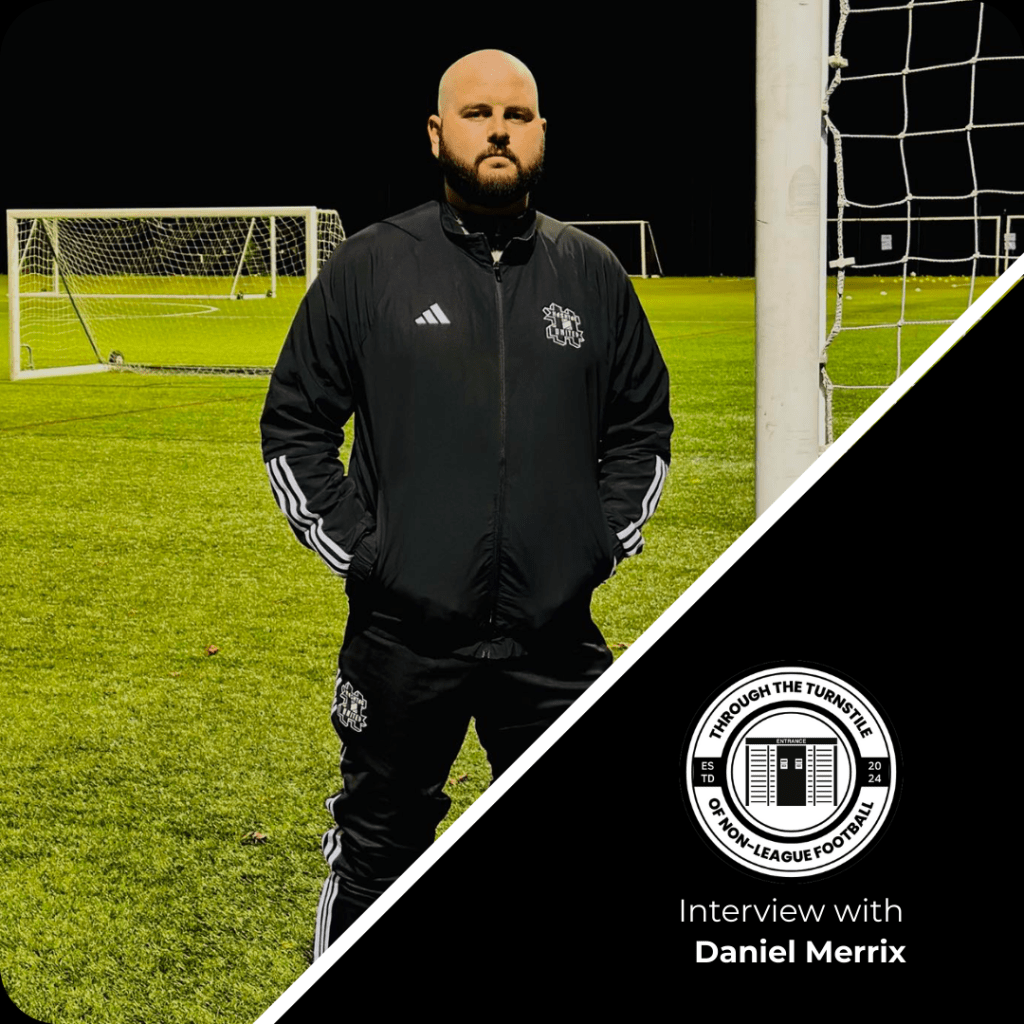
Welcome back everyone to Through the Turnstile meets, now this one comes off the back of a recent Facebook post in ‘Non League Football’ group by the man we are set to the speak to. The post in question was this:
Looking for Step 5 or 6
Current Roles: Chelsea Post 16 | QPR Academy
Previous Non-League Clubs: | Edgware & Kingsbury | Hashtag United | Portobello FC | Rayners Lane
Previous Experience at Step 4-7
Location: Based in East London
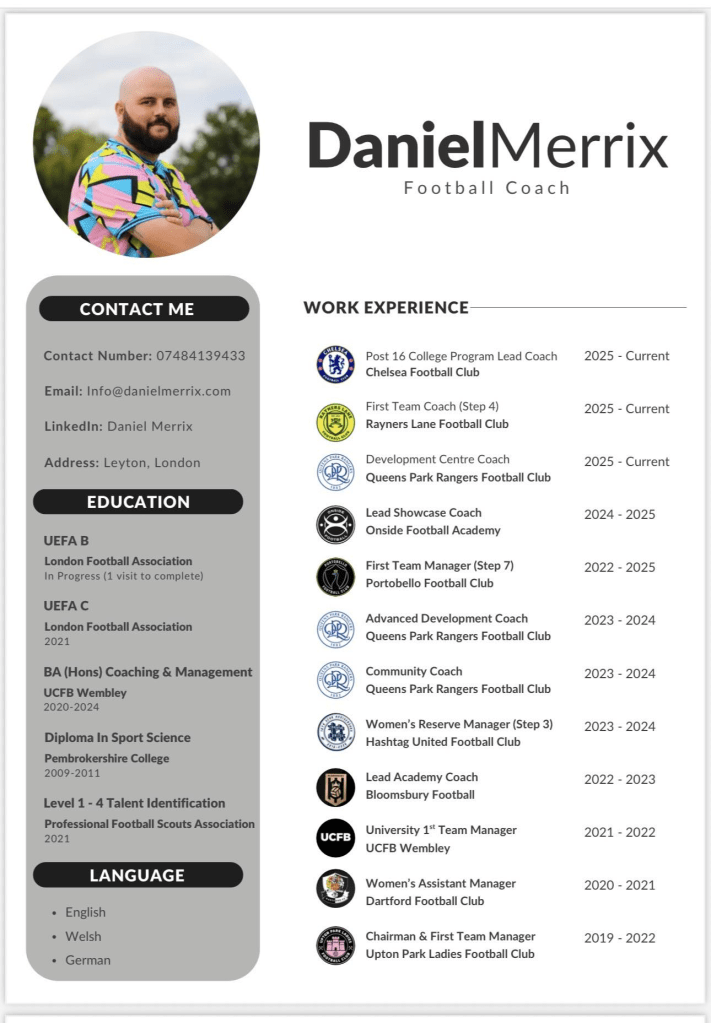
Now what stood out for me was, this was not your run of the mill post for the group. The CV was also very smart and well presented and that was enough for me to be curious to reach out and ask Daniel if i could snag him for a few questions.
I am pleased to say that he agreed and I am very grateful he did as his answers were very interesting to hear. Lets get stuck in!
Name – Daniel Merrix
Age – 34 years old
Favourite team – Swansea City
Occupation – Full time football coach
Thing I love about football – I love the day to day of being on the grass close to the players, the banter, the excitement of a matchday
My football pet hate –When people are not true to their word or commitment
You’ve worked across men’s, women’s and academy football at different levels – how have those experiences shaped the way you approach management today?
My experience across these different levels and working with different genders has shaped my ability to communicate ideas effectively. I’ve grown to understand the needs of different people and how they retain information, when and how to challenge them and my understanding that different environments need a slightly different culture.
During your time as First Team Manager at Portobello FC, what were the biggest challenges you faced and what are you most proud of achieving there?
My most proud achievement was building the club from no equipment or players and finishing 7th in the league in our first season and winning the league title in our second season with only one defeat all season and a cup semi final. I still look back on those memories as my fondest in management and miss that group of men. As you can imagine the biggest challenge was creating something from scratch so that we would be recognised as an established club as at the beginning we were only able to recruit players not wanted by other clubs. It was about those diamonds in the rough and polishing them.
You’ve held roles at clubs such as QPR, Chelsea and Hashtag United alongside non-league management – how have those professional environments influenced your work in non-league football?
The standards in which I hold myself to are extremely high because of these environments and it’s taught me the importance of detail. One of the biggest lessons I’ve taken is the methodology, how we as coaches implement our game models, philosophies and learning through the teaching methods we use and how these influence performance.
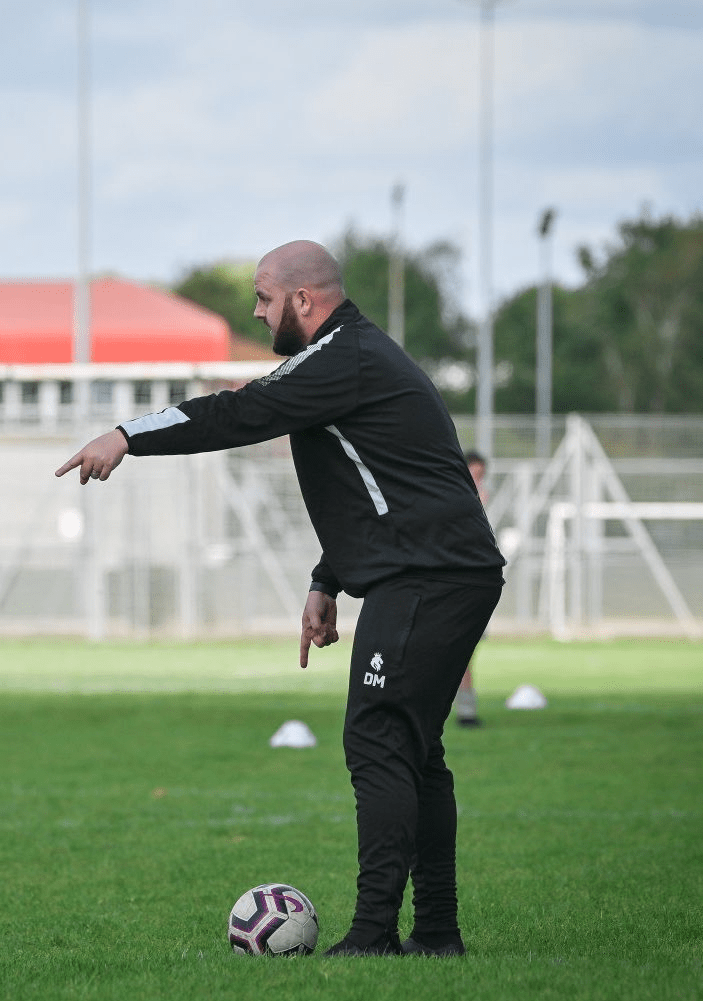
You’ve often balanced multiple roles at the same time – how do you manage your time and maintain high standards across all responsibilities?
You should see the reminders, alarm clocks and calendar events on my phone.
I’m very meticulous about time management, organisation and working efficiency. I have a schedule that allows for high capacity of output which has often translated to success across multiple roles as I find it easy to differentiate between each responsibility now.
I have completed all the blocks of my UEFA B I am just looking for a club where I can complete the final state with a tutor visit to sign off. During this process over the last 12 months it’s complemented my degree in coaching very well. In fact we’ve gone over a lot of key points such as unit work, strategies and tactics which I’ve further developed. I believe that is one of my strongest points as manager being able to feel a moment and change it to affect the team.
Daniel on taking his UEFA B licence and what he has learnt.
Having coached players at different ages and stages, what have you learned about motivating players and managing different personalities?
That some people similar to myself are intrinsically motivated by their own desire to succeed and their internal ambition. Whilst others need extrinsic motivation that comes from the culture, their peers or the relationship you build with them and how for some that can contribute to their output. It’s getting the balance right between what pushes them to their limit to increase their level and what helps them to feel comfortable carrying out their role.
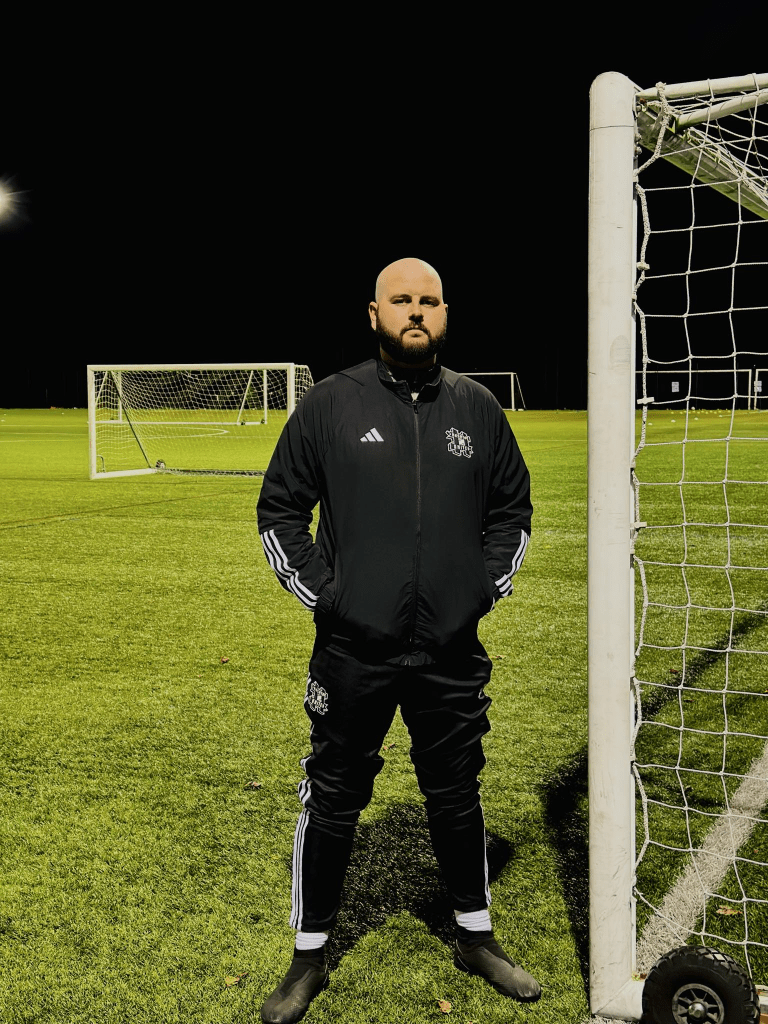
With your background in development and academy football, how do you identify and develop talent in a non-league environment with limited resources?
Great question, I think this comes down to identifying first the desire and will of a person and how much importance they place on my non Negotiables and club values. In short, their mindset is more important than their skillset when it comes to achieving long term success. There are instances of course where short term success is needed but not at the compromise of good culture. Then it’s essentially our job as coaches / managers to partner with them to develop skill set and knowledge.
What mistakes or setbacks in your career have taught you the most important lessons as a manager?
I think the biggest one for me was when we won the league with portobello and my desire and ambition naturally is to kick on and go challenge for the league above and achieve more success. At the time after winning a league perhaps there could have been more long term thinking in establishing ourselves first.
How would you describe your management and leadership style, and how do you adapt it to different squads or situations?
I always describe my style as transformative leadership. I model good standards of behaviour and good practice which encourages people to follow that standard. I’ve seen players work with me for a season or two and climb up the steps rapidly because of it. I’m very clear about expectations, the vision and style we wish to play and can identify what a specific group of players needs that might mean adapting slightly but the fundamentals of principles remain. Most players who work with me would also describe me as passionate and even intense in the way I work. I demand a lot of myself first and foremost.
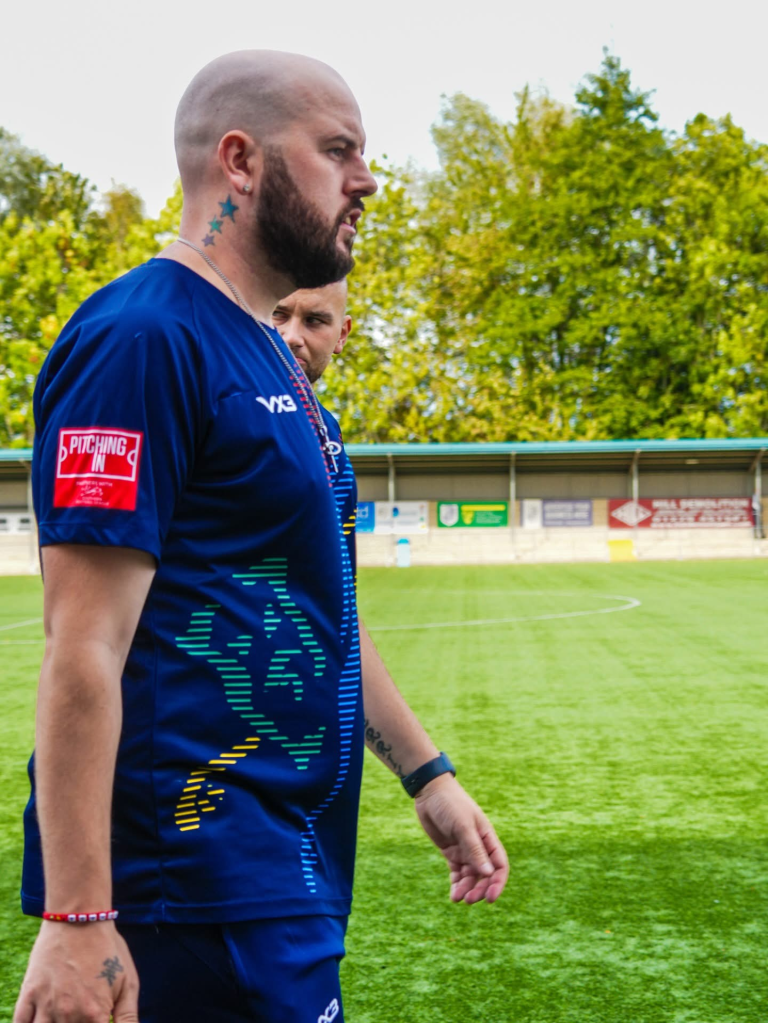
When taking over a new non-league club, how do you go about building a strong dressing-room culture and gaining player buy-in quickly?
I have seen that when managers bring clarity it creates quick understanding which leads to players buying in. The modern player now wants transparency and is sick of being promised one thing and it not being the case. I’m very straight with people, I want people to know where they stand and where we are heading for them to decide whether they’re all in with the project. Obviously a few fun arrival activities, small sided games and shooting practices help at times too.
What are you looking for in your next non-league management role in terms of club ambition, structure and values?
I’m looking for a club that wants to uphold good standards from the way we conduct ourselves on and off the pitch to the learning environment we create for players. I am looking for a club that wants to see a clear identity in their team, one that connects fans, brings people through the gate and ultimately creates a community feel so people are proud to see their club work hard, are well organised and express themselves. I am passionate about developing young players so a club looking to integrate youth around some experience would be an added bonus.
Where do you hope to be as a manager in five years’ time, and how does this next role fit into your long-term plans?
I have the ambition to work on a coaching staff in the football league. I’m 34 so there is plenty of time to get there. However, one of my initial targets is to bring success to a club that’s been sitting on its potential and go on a journey together. In doing so establishing that club in the community and me in their history so we have memories to share.
A fascinating read, I found it really interesting to hear from Daniel on how his past has shaped him to this day. I also found it quite easy to hear and understand his passion that he has in his work. Daniel knows what he wants to do and is looking to draw on his past experiences to make it happen for wherever his next challenge takes him.
I am willing to bet it wont be too long before that happens, the football league could well be calling in the future and Daniel is ready to answer.
Until next time.




 Through The Turnstile of Non-League Football
Leave a comment